Better Water Starts with the Right Filtration Solution for Your Home or Business
Water is one of those things we rarely think about until something seems off. Maybe your drinking water has an unusual taste, your coffee doesn’t taste quite right, or you notice white mineral deposits around your faucets. At a business, the concerns can be even more noticeable. Water quality may affect equipment, cleaning routines, customer comfort, and the overall experience people have in a building.
The good news is that improving water quality doesn’t have to be complicated. With the right information and a suitable treatment system, homeowners and business owners can make practical decisions that support cleaner, better-tasting water. The first step is understanding what’s actually in your water and what you want your treatment system to accomplish.
Why Water Quality Deserves More Attention
Water can look perfectly clear and still contain dissolved minerals, chlorine, sediment, or other substances that affect its taste, odor, and performance. The exact conditions depend on the local water supply, plumbing, and whether a property uses municipal water or a private well.
For homeowners, common concerns include hard water spots, unpleasant odors, and sediment that collects in fixtures. Businesses may face additional challenges. Restaurants, offices, healthcare facilities, and hospitality properties often rely on consistent water quality for everyday operations.
Rather than choosing a product based on a general promise, it’s worth identifying the specific issue first. A water test can help reveal mineral content, pH levels, and certain contaminants. Depending on the concern, more specialized testing may be appropriate.
That information makes it easier to choose a system that addresses a real need instead of paying for features that may not offer much benefit.
Commercial Water Filtration Requires a Different Approach
A system that works well in a small household may not be suitable for a busy commercial property. Businesses typically have different water demands, operating schedules, and maintenance requirements. A restaurant may need dependable water for beverages and food preparation, while an office might prioritize convenient access to drinking water throughout the day.
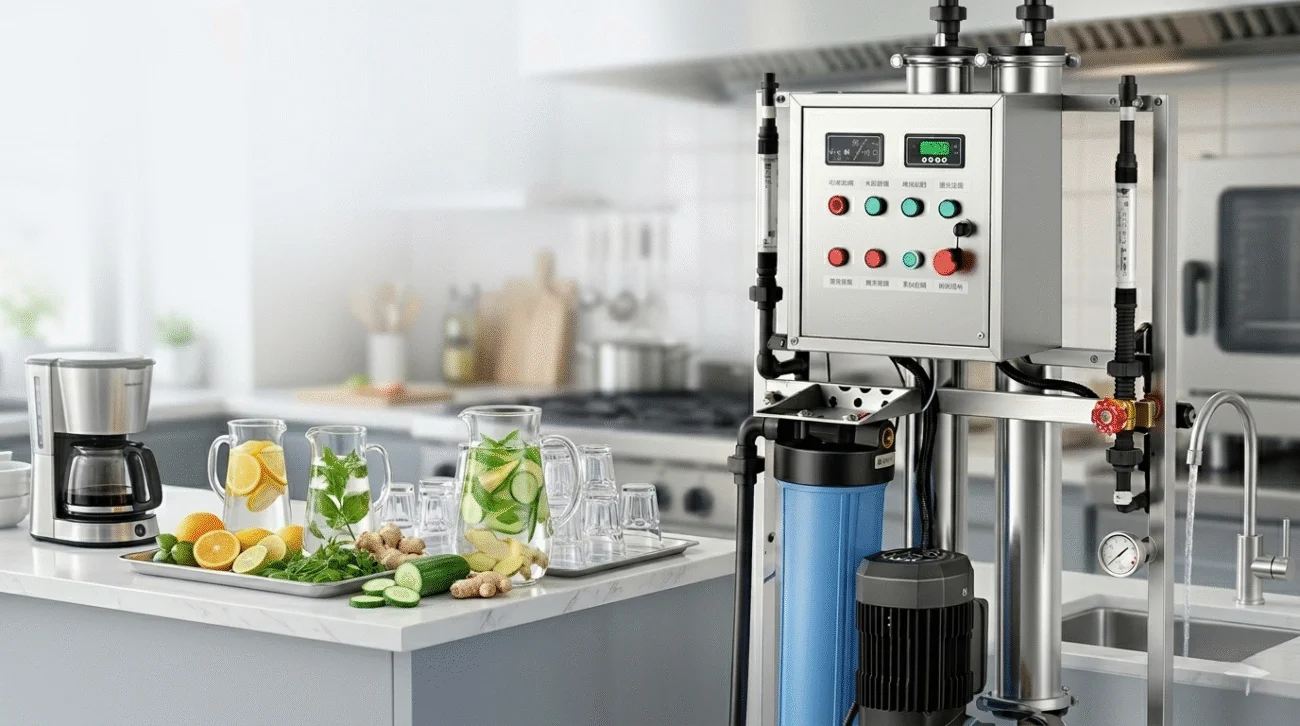
Choosing commercial-grade water filtration involves looking beyond the equipment itself. Daily water usage, peak demand, incoming water conditions, available installation space, and the type of contaminants being targeted all matter.
Capacity is particularly important. A system that is too small may struggle during periods of heavy use, while an oversized system could add unnecessary expense. Maintenance should also be considered from the beginning. Filter replacements, service intervals, and access to technical support can influence the long-term value of the investment.
Businesses should also consider whether the system is designed for its intended application. Drinking-water filtration, scale reduction, and whole-building treatment serve different purposes. The best solution depends on the property, the water supply, and the results the owner wants to achieve.
Understanding the Different Types of Water Treatment
Not every water concern calls for the same technology. Learning the basic differences between treatment options can prevent confusion and make the selection process much easier.
Sediment filters capture particles such as sand, rust, and suspended material. Carbon filters can reduce chlorine and improve taste and odor, depending on the filter’s design and certification. Reverse osmosis systems use a semipermeable membrane to reduce many dissolved substances, although performance varies by contaminant and system configuration.
Water softeners serve another purpose. They reduce hardness minerals, especially calcium and magnesium, which contribute to scale buildup on plumbing fixtures and appliances. They aren’t a substitute for every type of drinking-water filter, but they can be helpful where hard water is a persistent problem.
Some properties may benefit from combining technologies. For example, sediment filtration can protect downstream equipment, while a separate drinking-water system addresses taste or specific dissolved contaminants.
The important thing is to match the treatment method to verified water conditions. No single system removes everything, and broad claims about completely pure or universally healthy water deserve careful scrutiny.
Start With a Consultation, Not a Guess
Shopping for water treatment equipment can quickly become overwhelming. Product descriptions often feature technical terms, performance claims, and different capacities that are difficult to compare without some background knowledge.
A professional assessment can help narrow the options. During a complimentary water & air consultation, homeowners and business owners can discuss their concerns, review available treatment approaches, and understand which questions need answering before installation.
It helps to arrive with a few observations. Does the water have an unusual taste? Is scale building up around faucets? Does the problem occur throughout the property or only at one tap? Have you noticed changes in water pressure or appliance performance?
These details can help guide the conversation. If testing is recommended, ask what it measures and whether additional laboratory analysis is needed for particular contaminants.
A consultation should also cover practical considerations such as installation requirements, routine maintenance, filter availability, and expected operating costs. A good recommendation explains both the advantages and limitations of a system rather than suggesting that one product solves every water problem.
Think About Long-Term Value, Not Just the Initial Cost
Price matters, of course. Still, the cheapest option isn’t always the most economical choice over several years.
When comparing systems, consider the initial equipment and installation costs alongside filter replacements, servicing, water usage, and any electricity requirements. Commercial properties should also think about the cost of downtime if equipment fails or replacement parts are difficult to obtain.
Warranty coverage and manufacturer support deserve attention, too. Ask whether maintenance can be performed locally and whether replacement filters are readily available. A system that looks affordable on paper may become less attractive if its consumables are expensive or difficult to source.
Before deciding, request a clear explanation of what the proposed equipment is designed to reduce. Certifications from recognized organizations, such as NSF, can provide useful evidence when they apply to the specific product and contaminant claim. Check the exact certification rather than assuming every product from a manufacturer has identical performance.
For business owners, the value calculation may also include operational consistency and customer experience. Reliable access to suitable water can support daily routines and reduce avoidable headaches.
Getting a Quote Without the Guesswork
Once you understand your water concerns and the type of treatment you need, comparing proposals becomes much easier. Ask each provider to explain the recommended equipment, its capacity, installation requirements, expected maintenance schedule, and any exclusions in the quoted price.
If you’re ready to get pricing for your system, provide as much useful information as possible. The property’s size, approximate water usage, existing plumbing, and any recent water test results can help a provider prepare a more relevant estimate.
It’s also worth asking whether the quote includes installation, initial filters, testing, and follow-up service. If several options are available, request a comparison that explains the practical differences rather than simply listing model numbers.
Avoid feeling pressured to make an immediate decision. A trustworthy provider should give you enough information to understand the recommendation and decide whether it fits your needs and budget.
A Practical Investment in Everyday Water Quality
Better water begins with understanding what you’re dealing with. Whether you’re improving drinking water at home or managing water demands at a commercial property, the right approach starts with clear goals, suitable testing, and equipment chosen for the actual conditions.
Take time to compare technologies, ask sensible questions, and consider maintenance alongside the upfront price. A well-matched system can make everyday water use more convenient while helping address specific concerns about taste, scale, or selected contaminants.
Ultimately, the best water treatment solution isn’t necessarily the most complicated one. It’s the one that meets your needs, performs as intended, and remains practical to maintain over time. With a little research and sound professional guidance, making that choice becomes much less daunting.